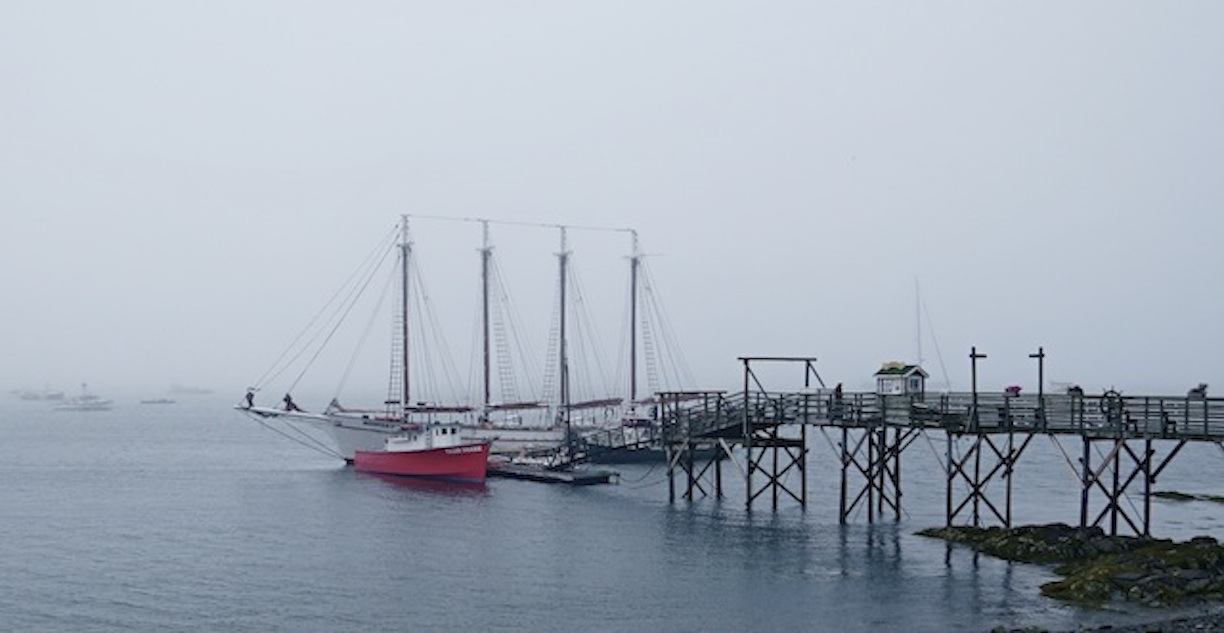
 I like the red boat, don’t you?
Where might it take you, when you pluck up the courage to climb aboard? Where has it come from?
Return to the Home Page to explore further.
I like the red boat, don’t you?
Where might it take you, when you pluck up the courage to climb aboard? Where has it come from?
Return to the Home Page to explore further.
1:
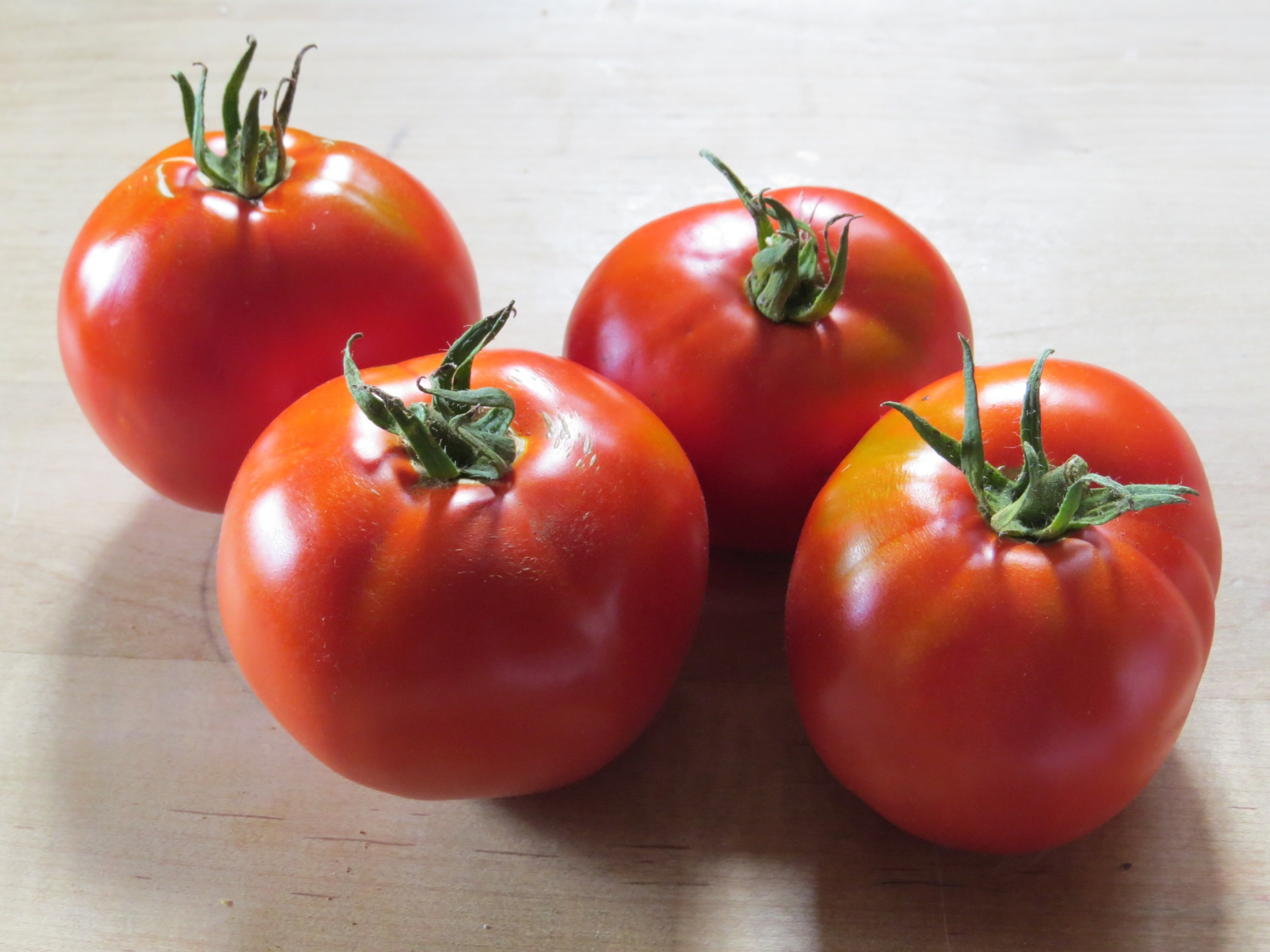
The kind of dust you can feel but not see. Streaked with gold. Medusa-like stems; cracks, dots, and dashes: tomatoes from a friend. I press my nose against their warm skin; even the scent is delicious.
2:
A clerk at Burlington Coat Factory becomes enchanted with my son, then two years old. She asks him, “Can I call you friend?” I hold my breath and hope for a sociable answer. Petulant, he replies, “Call me Big Boy.”
3:
Our canoe cuts silently through the waters of the canal. Once the province of mule-pulled coal boats, today algae and forest growth carry out their slow coup. At a clearing, we greet a fisherman: “Catch anything?” He is optimistic: “I’m goin’ to; there’s a big one in there!” We wish him luck and glide on by.
Return to the Home Page.
While our storytelling can reshape the past and present, occasionally something happens to set events in stone, connecting them to future generations forever, it seems.
On a recent visit to Roosevelt Island, a lesser known part of New York City, stones lay nearly everywhere. They covered the shores. Some crumbled in heaps amidst moldering ruins; others graced the island’s tip, marble and bright white.
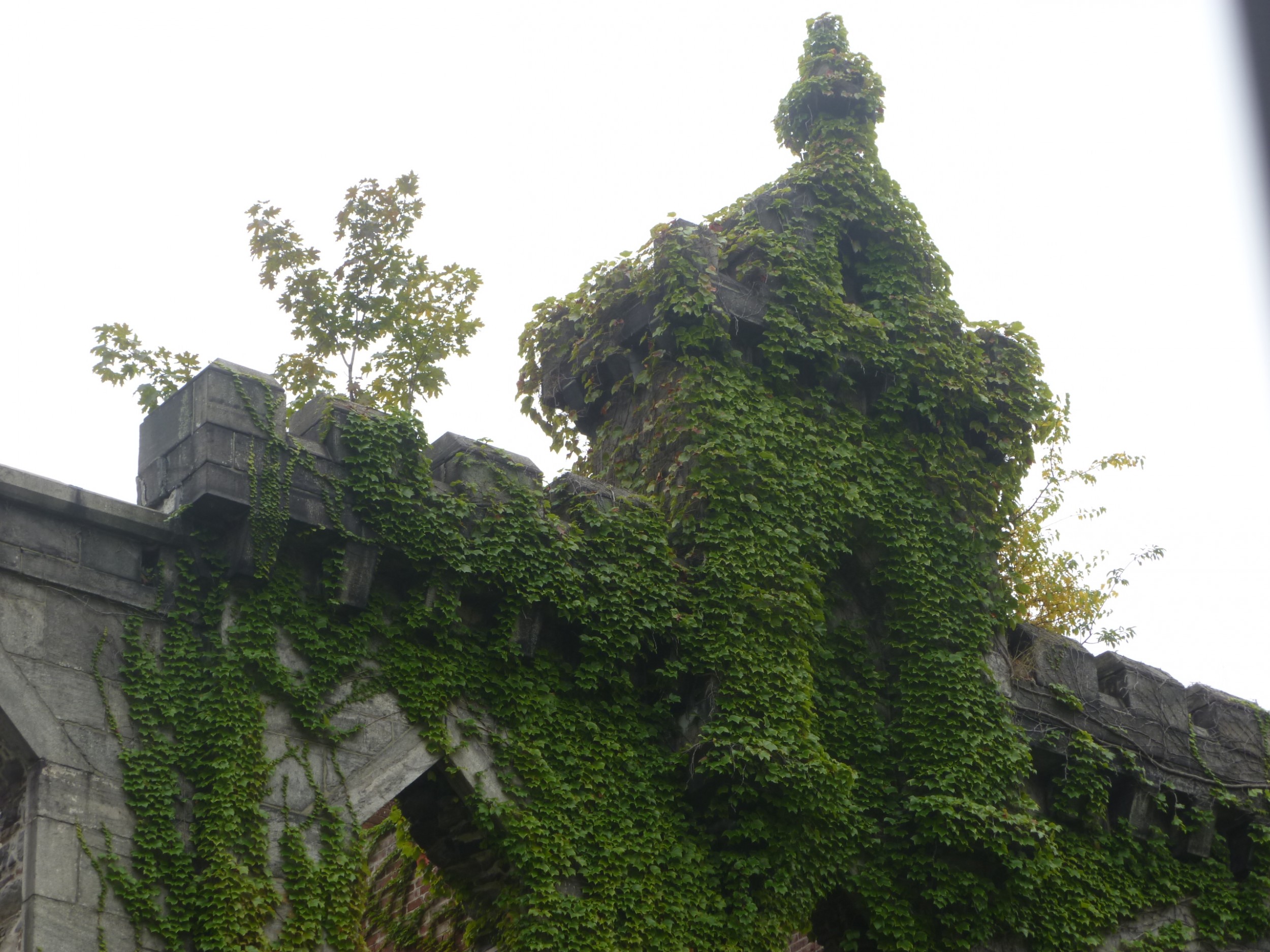
Originally home to the Lenni Lenape tribe, the island first became the pig farm and then the quarantine zone to the city’s residents. The masonry of the vine-choked walls at the abandoned Smallpox Hospital adheres, barely, as a testament to the days when the wealthy could be drawn to a sanitarium, if it was ornate enough for them.
This island, narrow and only two miles in length, lies in the East River that courses alongside New York City. In the 1920s, the place came to be known as “Welfare Island,” site of low income housing. Then that term fell out of favor.
Across the river in Manhattan, the United Nations complex rose, inspired in its foundation by what Franklin D. Roosevelt called, in his 1941 State of the Union speech, “four essential freedoms.” These are freedom of speech and self-expression, freedom to worship as one chooses, freedom from want, and freedom from fear.
FDR had also served as the governor of New York State, so when the time came in 1973 to find a new moniker for the island, the natural choice was “Roosevelt.” Less natural, and so all the more incredible, is that a buildout of earth and rock should be created to extend the southern tip of the island, putting it on par with the U.N. complex. The architect Louis Kahn designed the grounds and monument to be installed on that extension in memory of Roosevelt. Pick up a book about Kahn written anytime in the four decades that followed, though, and the project is among Kahn’s “unbuilt” works.
Not so any more.
The linden tree-lined Four Freedoms Park, completed in 2012, features optical illusions along paths that lead to an outdoor “room” of stone, sunlight, and serenity. All this, even though the monument lies exposed to the river and to the cityscapes of Manhattan and Queens. Along the banks of that borough to the east, a red Pepsi-Cola sign is lashed to a row of bleak apartment buildings. There is the certain knowledge that, to the west in Midtown, car horns and sirens call out their warnings. Yet those sounds are muted.
The very walls of the memorial encourage tunnel vision: Look to the river, they seem to whisper. For, despite what we humans deem permanent, water will wear down any stone. The haze in the air that day gradually obscured the sights on the opposite banks. It diminished the strength not only of the sun, but also of a busy mind. My thoughts drifted while my body relaxed onto the summer-warmed white marble couch.
I gazed off the memorial’s stern right angles and into the river. There, sea gulls huddled on water-smoothed rocks, as if waiting to learn what else we may build of mere stone.
Return to the Home Page.
Last summer, my vegetable garden ran away and inspired me to do the same thing.
The garden ran away with weeds, no see ‘ums, and platter-sized squash leaves. In consideration of this and of the previous years’ invasions of cabbage moths, ground hog and poison ivy, I’ve given up. The plot is ready for something new and so am I — an all new plot.
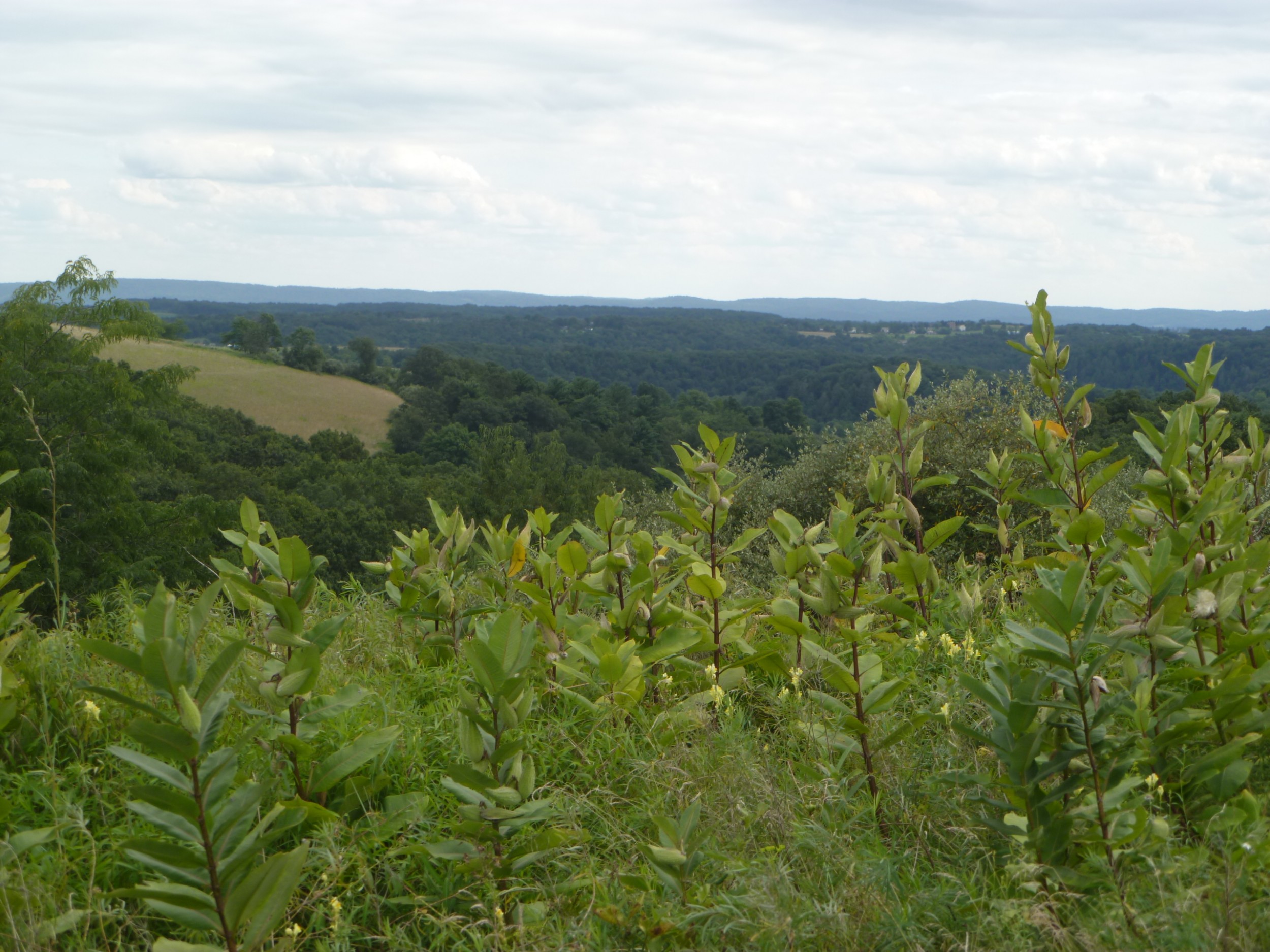
For inspiration, I consulted Thomas Marent’s “Butterfly” and other such books and discovered the milkweed plant. Perhaps I should say re-discovered because I distinctly remember gluing the seeds with their gossamer threads onto blue paper in first grade. The milkweed plant, say the books, attracts and provides habitat for butterflies.
It turns out that milkweed grows thick on the hills of the Trexler Nature Preserve above the Lehigh Valley Zoo. They stand in willowy patches and fields, in amongst the coneflowers and black-eyed susans. I found them, you see, because I’d run away, but only for the day.
On returning, I brought with me all kinds of ideas for how the future could look and so this blog was born.
Return to the Home Page.